How WhatsApp Voice Messages Are Changing the Rules – and What That Does to Your Evenings
Voice messages replace the phone call, just without being in sync. What that means for reply times and availability – and how to set boundaries.

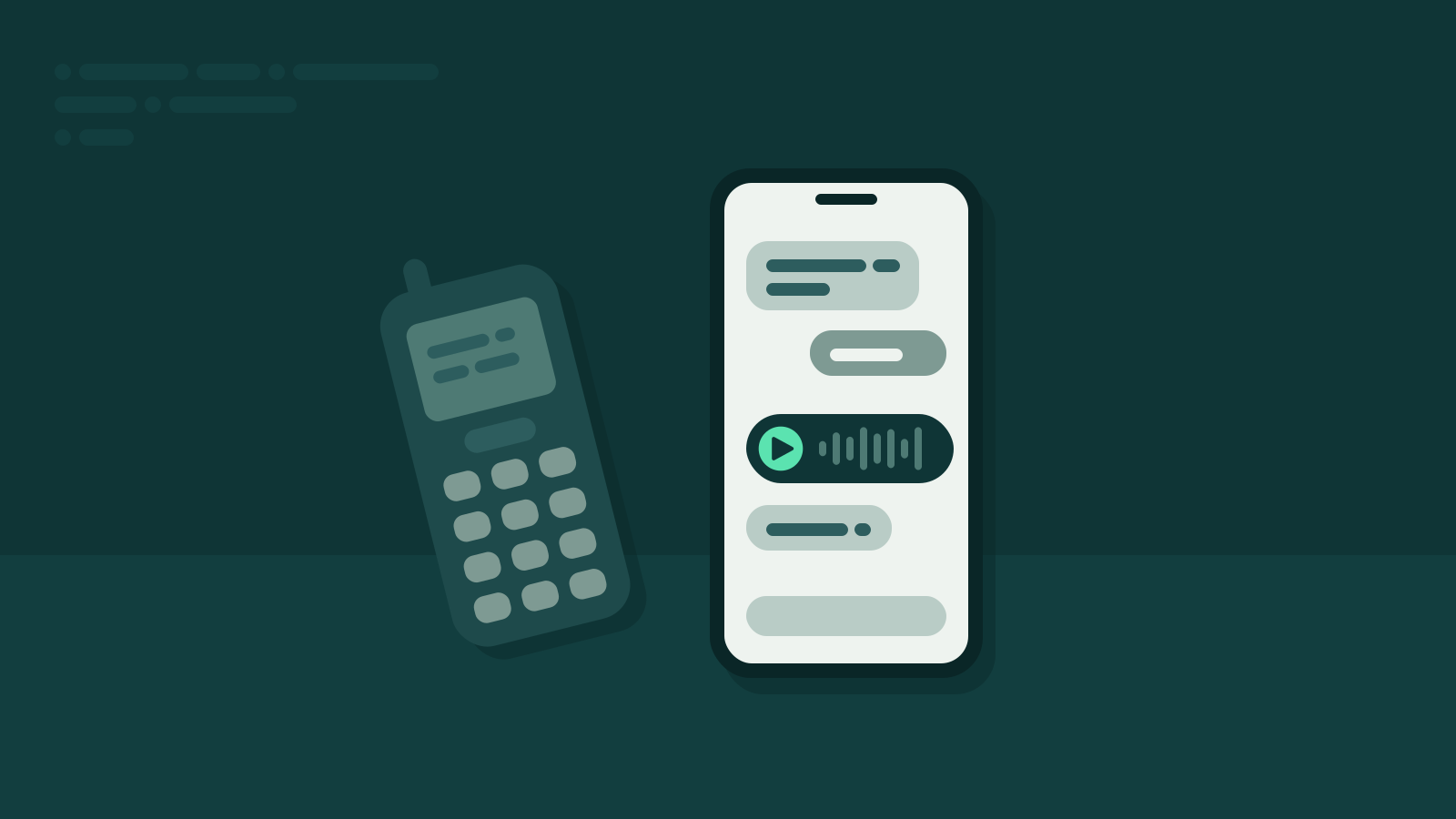
The phone used to ring. Either you picked up or you didn’t – and if you didn’t, that was the end of it for the time being. Today, a voice message arrives instead. It doesn’t ring, but it stays. And that’s exactly what changes the rules.
The phone call without the “at the same time”
A call needs two people at the same time. A voice message doesn’t. One person talks whenever it suits them – at the traffic lights, while cooking, at 11:40 pm on the sofa. The other listens whenever it suits them.
At first, that’s a win. Nobody has to ask “Got a minute?” anymore. Nobody gets pulled out of dinner. The technical term is asynchronous communication. The everyday term: everyone replies when they can.
The technology is asynchronous, the expectation isn’t
Whoever sends a voice message feels like they’ve started a conversation. And you don’t leave a conversation hanging for hours. The voice makes it worse: it sounds like a phone call, so people expect a reply at phone-call speed.
Then there are the little signals. The ticks turn blue, and the sender knows: delivered. From now on, an invisible clock is ticking for them. “Get back to me when you have time” quietly turns into “Get back to me, now that you’ve heard it”.
What that does to your evenings
An email from a colleague at 9 pm stays in your inbox. A voice message from a colleague at 9 pm lands between a photo from your mom and the football chat. Work and private life share the same channel – and with it, the same expectation that you’ll just have a quick listen.
The tricky part: the message itself is harmless. “No stress, just so you know for tomorrow.” But now you know today. And you’re thinking about the presentation while brushing your teeth.
Healthy boundaries for asynchronous communication
Asynchronous only works if both sides take it seriously. A few rules that help:
- Say your reply times out loud. “I usually reply in the evening” or “I’m off work from 6 pm” – said once, that saves a lot of guesswork.
- Leaving it is not ignoring it. A voice message can wait. A quick “I’ll listen tomorrow” is enough if it matters to you.
- Sending late is fine, expecting late isn’t. If you talk at midnight, say it can wait. And mean it.
- Urgent things belong on the phone. If you need something right away, call. Voice messages are for everything that can wait.
- Set your notifications on purpose. Muting a work chat isn’t rude, it’s self-protection.
Check quickly without listening
Sometimes you just want to know whether something can really wait until tomorrow. You don’t need to listen for three minutes for that. Forward the message to Summarize.One, read the summary in a few seconds – and then decide whether it belongs in your evening or your morning. Usually: morning.
Bottom line
Voice messages take the “at the same time” out of conversation. That’s a good thing – as long as we don’t load them with the expectations of a phone call. Asynchronous means: everyone replies when they can. You too.