Communicating Efficiently – Tips and Tricks for Replying to WhatsApp Voice Messages
Text for voice, quoting, numbered replies, emoji reactions: how to reply to voice messages without anything slipping through the cracks.
Your sister sends a voice message. 2 minutes 10, three questions, one of them hidden somewhere around second 90. Now it’s your turn. The question isn’t how you listen to the message – it’s how you reply so that everything is settled afterwards.
Text for voice is fine
Nobody expects a voice reply to a voice message. People who talk usually just want to get what’s on their mind off their chest. What the reply looks like often doesn’t matter to them – as long as it comes.
As a reply, text even has advantages: the other person sees right away what’s what, and can find it again later. Especially for yeses, times and addresses, text is the kinder choice. So there’s no reason to feel guilty for typing where others talk.
Quote instead of guess
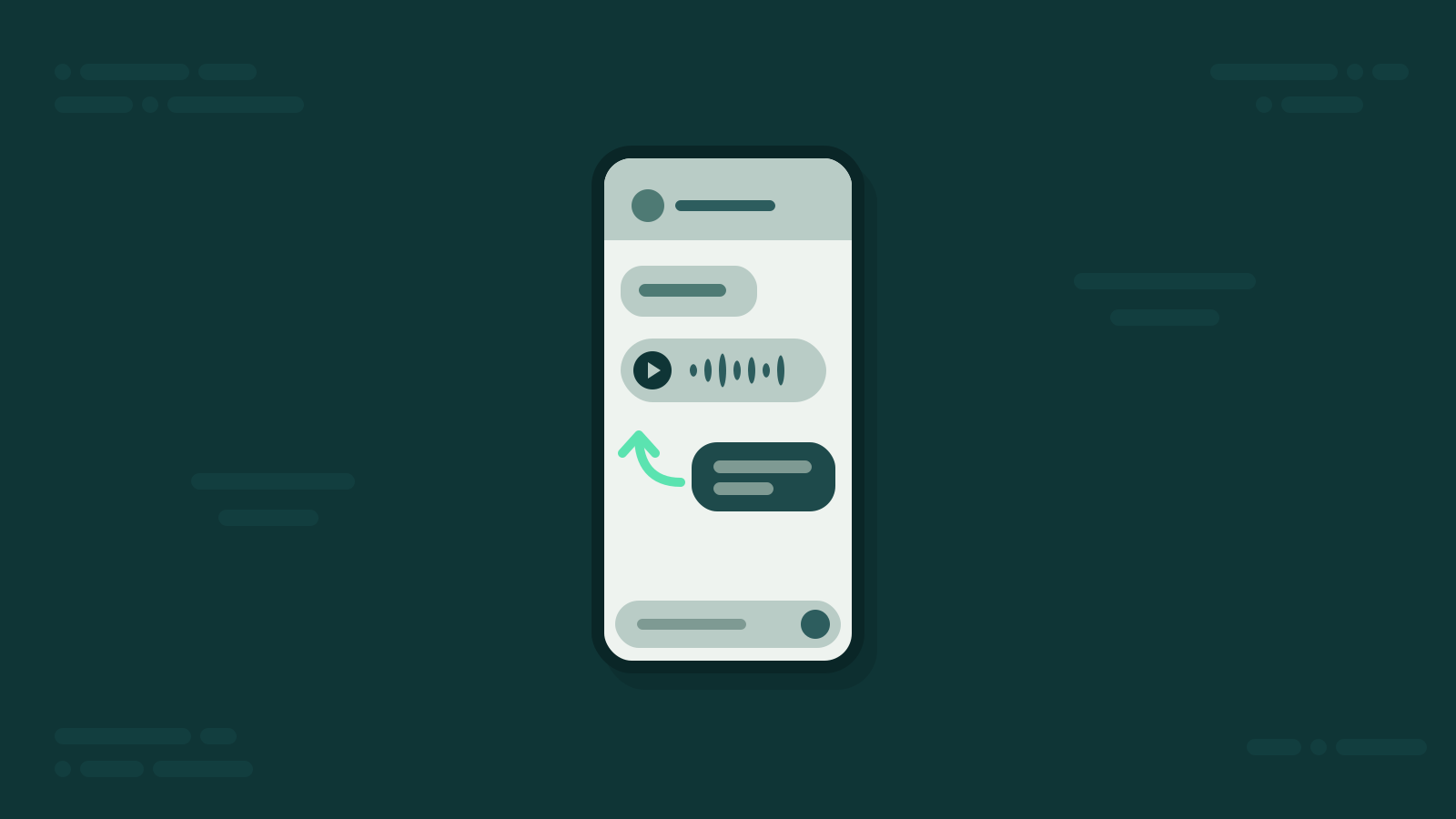
In busy chats, messages fly back and forth. A “Yes, works for me” can then refer to three different things. So: press and hold the voice message and tap “Reply”. Your answer is then visibly attached to exactly that message.
That helps most when other messages came in between or you reply hours later. Without the quote, the other person has to guess – or listen to their own voice message again to work out what you’re referring to.
Several questions? Reply with numbers
Voice messages are rarely tidy. Questions pop up, disappear and come back at the end: “Oh, and about Sunday …” Reply to that in one block of text and one of them is guaranteed to get lost.
Better like this:
- Sunday works, I’ll be there from 2 pm.
- I’ll bring the cake.
- Present for Dad: I’ll ask Tom if he wants to chip in.
Three lines, three answers, nothing forgotten. The other person can tick them off. And if you don’t know something yet, write that down too: “4. No idea, I’ll get back to you by Friday.”
A clean overview helps you not to miss any question. If you forward the message to Summarize.One, you can get the summary as bullet points – handy as a checklist for your reply.
A quick reaction: the emoji as “seen”
Not every voice message needs an answer. “Got home safe” or “Picked up the parcel” just wants to be acknowledged. A reaction does the job: press and hold the message, tap thumbs up or a heart, done.
That’s not brushing someone off – it’s a clear signal: received, understood, nothing open. Just be careful with real questions. A thumbs up on “Can you pick me up tomorrow at 7?” is a yes – whether you meant it or not.
When a voice reply is better
Sometimes voice is the right answer after all:
- When it gets emotional. Comfort, congratulations, an apology – typed, they easily come across as cold.
- When the explanation gets long. Before you type five paragraphs, talk for 40 seconds instead.
- When a misunderstanding is in the air. Your voice shows you’re not annoyed. A text has to insist on it.
And when you do talk, you can still jot down the key point: “So: Saturday 10 am, I’ll bring the drill.”
Bottom line
Good replies are unambiguous: quoted, numbered or acknowledged with a thumbs up. Whether you type or talk depends on the content – not on how the question was asked.