Are WhatsApp Voice Messages the Future of Communication?
AI makes voice messages readable, searchable and summarizable. What that means – and what to look out for when it comes to data protection.
The voice message has a basic problem: it’s convenient to send and tedious to receive. You can’t skim it, can’t search it, can’t just read it during a meeting. That’s exactly where AI tools are stepping in right now. Whether that makes voice messages “the future”, nobody knows. But they are changing.
From audio track to text
Speech recognition has become remarkably good. Spoken words turn into text, even with background noise and leaps of thought – although with a strong accent or street noise, not every word lands yet.
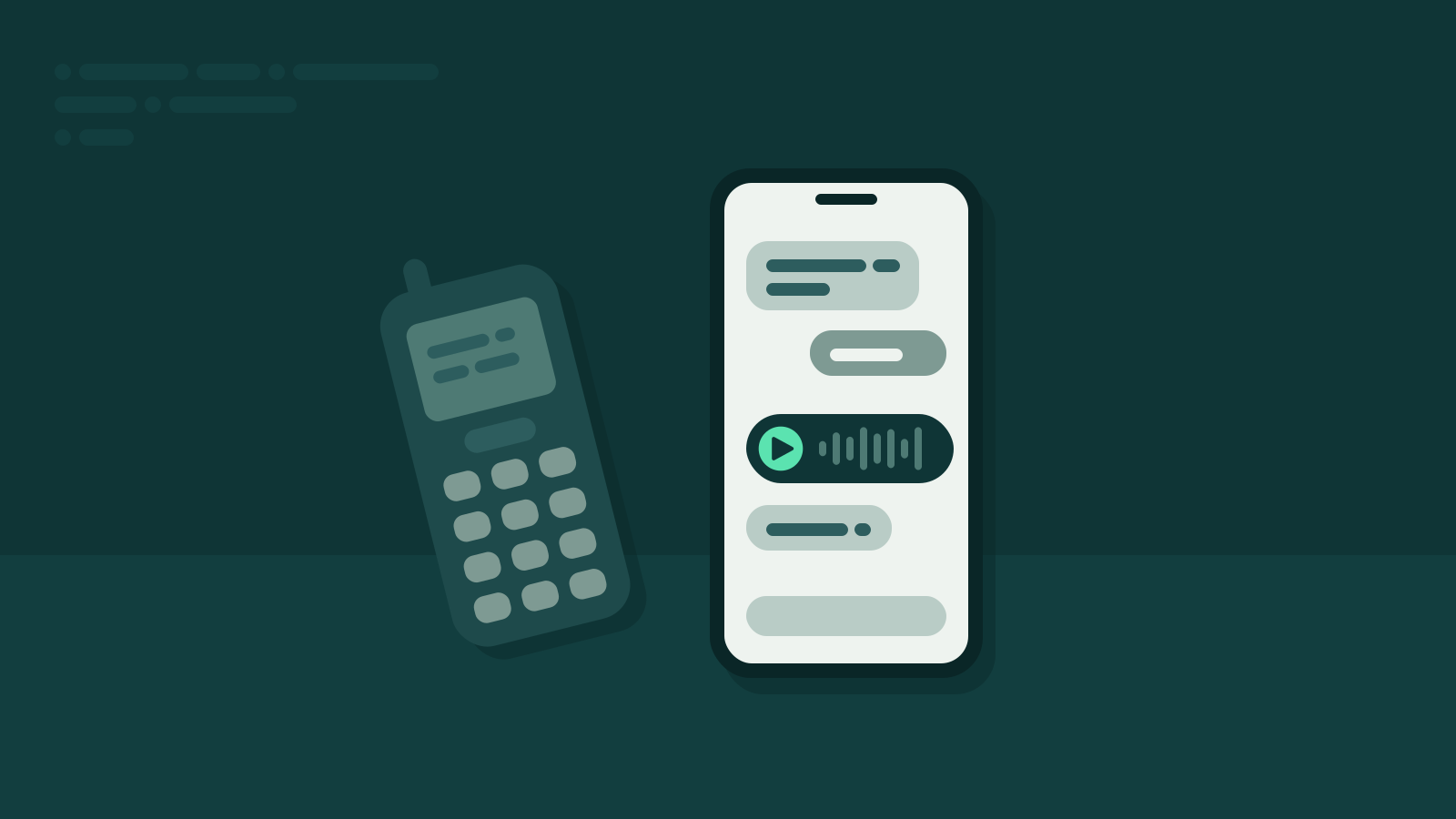
That changes what a voice message is. Until now it was an audio track you could only play from start to finish. Once it exists as text, it becomes:
- readable – no headphones, no speaker, even in the waiting room.
- searchable – the address your brother told you weeks ago, you find with a search term instead of endless replaying.
- summarizable – four minutes of storytelling become three sentences with what matters.
What that could change
If recipients no longer have to listen, the long voice message loses its terror. The sender talks the way they think. The recipient reads what they need. Maybe voice messages will even become more popular because of it – because they cause less annoyance.
Just as plausible: we start listening more deliberately again. Namely when the voice matters – your niece laughing, your best friend’s message after a rotten day. The rest we read.
Both are guesses, not forecasts. The only certainty: the technology is here, and people are using it.
The flip side: your voice is data
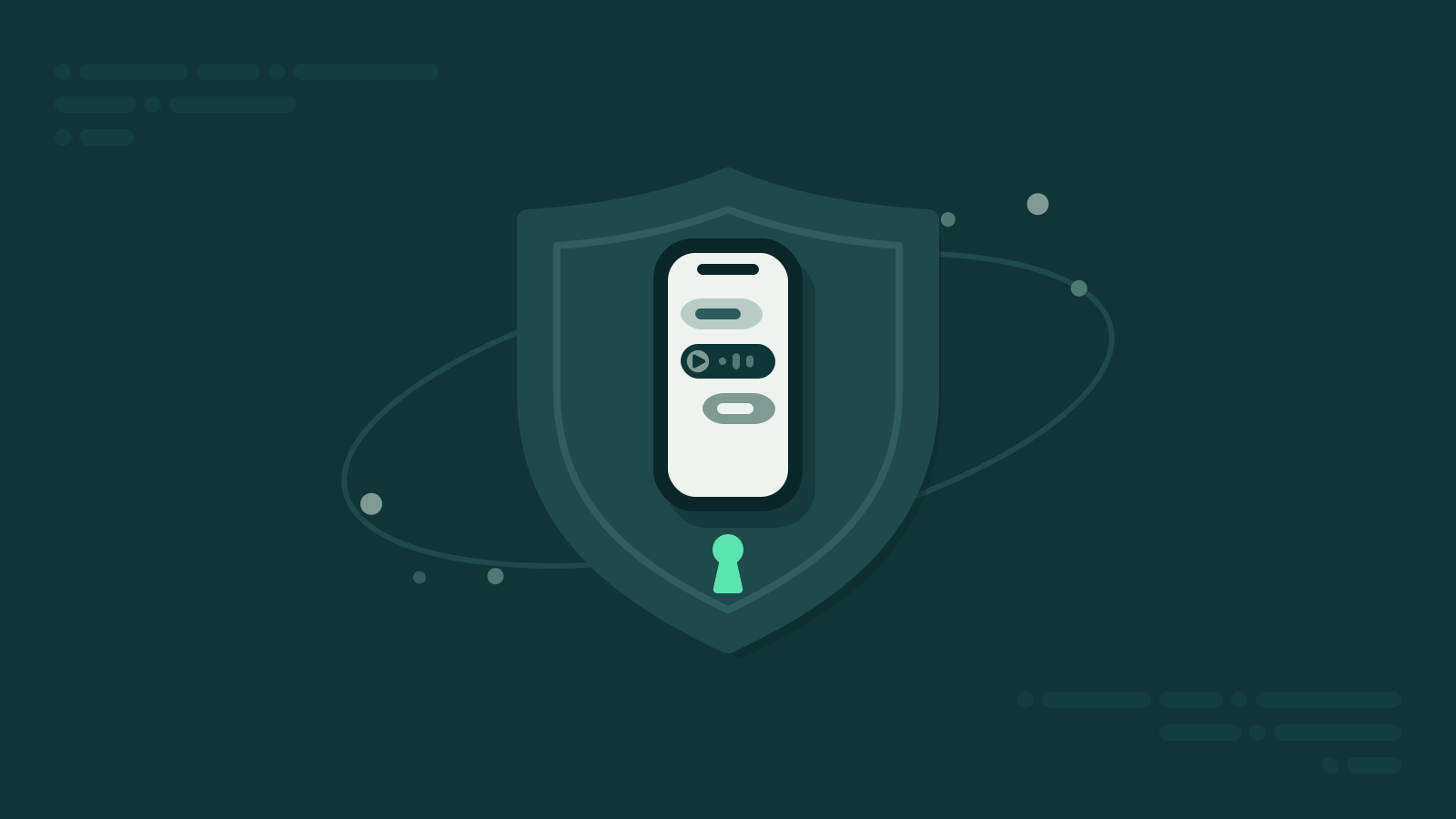
For an AI to process your voice message, it has to receive the message. And that’s where it gets serious. Voice messages often contain more private things than texts: doctor’s appointments, arguments, money worries, names of other people. And your voice itself is a personal characteristic.
Before you use a tool that processes your voice messages, a quick check is worth it:
- Where are the servers? If processing happens in the EU, European data protection law applies.
- Is the service GDPR-compliant? That should be stated clearly, not hidden somewhere.
- Is the transmission encrypted?
- What happens to the data afterwards? How long is it stored? Is it used to train AI? Is it passed on to third parties?
- Who’s behind it? Is there a legal notice and a contact address that actually answers?
The answers are in the privacy policy. Yes, nobody enjoys reading those. But a few minutes of reading is a fair price for knowing where your voice ends up. If anything is unclear: ask. A reputable provider will answer.
An example from practice
Summarize.One is a bot on WhatsApp that summarizes forwarded voice messages. Processing runs on servers in the EU, communication is encrypted, and the service is GDPR-compliant. Exactly what happens to the data is in the privacy policy – and you should read it before you get started. That goes for us as much as for any other provider.
Also important: nothing happens automatically. The bot only gets what you forward to it yourself.
Bottom line
AI turns the voice message into something you can read, search and summarize. Whether that makes it the future of communication remains to be seen. What’s clear: the more practical the tools become, the more important the question of who you trust with your voice.